How solar window film actually works
Ordinary glass lets a huge amount of the sun’s energy straight into your home. Solar control film is a thin, optically clear layer applied directly to your existing glass that reflects and absorbs a portion of that solar energy before it gets inside. Good-quality film rejects a large share of total solar heat and up to 99.9% of UV rays, while still letting natural light through. Less heat coming in means less heat your air conditioner has to remove.
So — will it lower your AC bills?
In most GTA homes and offices, yes, it helps — but be realistic about how much. Windows are only one path heat takes into a building (walls, roof and air leaks matter too), so film is not a magic switch that halves your hydro bill. What it reliably does is cut the heat gain through your glass, which shows up in three ways you’ll actually notice:
- More even temperatures — fewer hot spots next to big windows, so your AC cycles less to chase them.
- Lower peak cooling load — the biggest savings land on the hottest, sunniest afternoons, exactly when GTA electricity demand (and time-of-use pricing) peaks.
- Less glare and fading — a comfort and protection win that isn’t on your bill but shows up on your furniture, floors and screens.
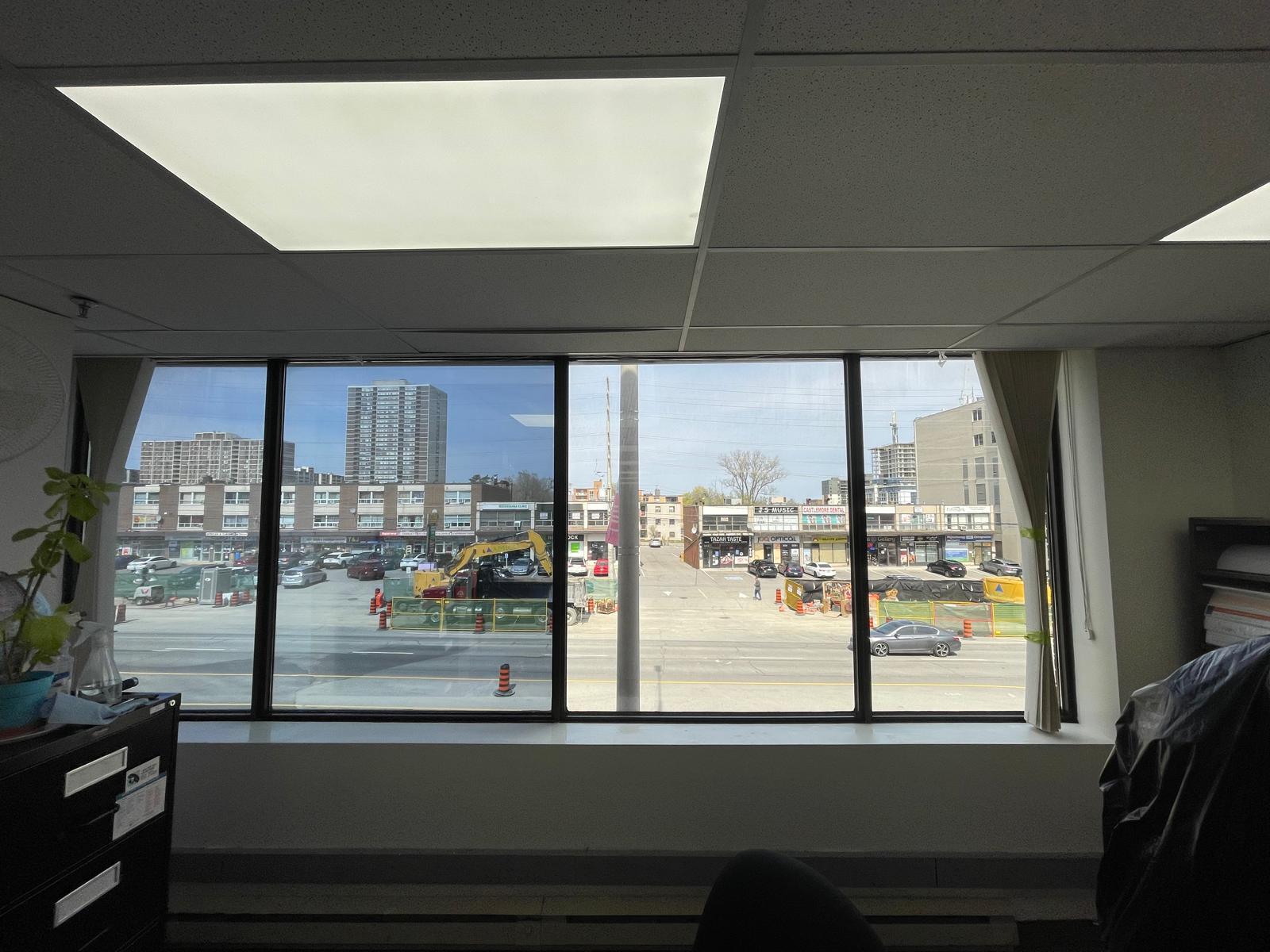
The homes and businesses that see the clearest payback are the ones with the worst heat problem to begin with: large, south- or west-facing glass, condos and top-floor units, sunrooms, and offices full of afternoon glare.
Where solar film pays off most in the GTA
Because our summers are hot and humid and many GTA condos and offices are wrapped in glass, solar film tends to be a strong fit here. It’s especially worth it when replacing the glass isn’t practical or affordable — film goes onto your existing windows, so it’s a fraction of the cost and disruption of new units, with the same day-to-day comfort benefit. For typical prices, see our window tinting cost guide.
Solar film vs. the alternatives
| Option | Heat & glare | Keeps the view | Cost & disruption |
|---|---|---|---|
| Solar control film | Cuts heat gain at the glass, all day | Yes — many films are nearly clear | Low; usually installed in a day on existing glass |
| Blinds & shades | Help when closed, but some heat has already passed through the glass | Only when open | Low to moderate |
| Replacement windows | Depends on the new glass specification | Yes | Highest; a renovation project |
Many GTA homes combine the first two: film to tame heat and UV all day, and blinds or shades for privacy and darkness when you want them.
What to look for (and what to ignore)
Not all film is equal. Look for a professional-grade product, a proper measure-and-install, and a real warranty — reputable installers back residential film for life and commercial film for years. Be wary of ultra-cheap DIY film that bubbles, discolours or isn’t matched to your glass. At Prime Window Coverings, our films carry a 10-year commercial and lifetime residential warranty, and we confirm glass compatibility before we start — see window film on double-pane and low-E windows.
The bottom line
Solar window film won’t rebuild your home’s entire energy profile — but for GTA properties with hot, sunny glass, it’s one of the most cost-effective comfort upgrades available. You’ll feel cooler, more even rooms, cut glare and UV fading, and take load off your AC on the days that matter most. If your rooms overheat every summer, it’s almost certainly worth a quote.